The Bias You're Sure You Don't Have
We all think we're less biased than the average person. The math says we can't all be right — and that gap shapes everything we read, hear, and believe.
The bias you're sure you don't have
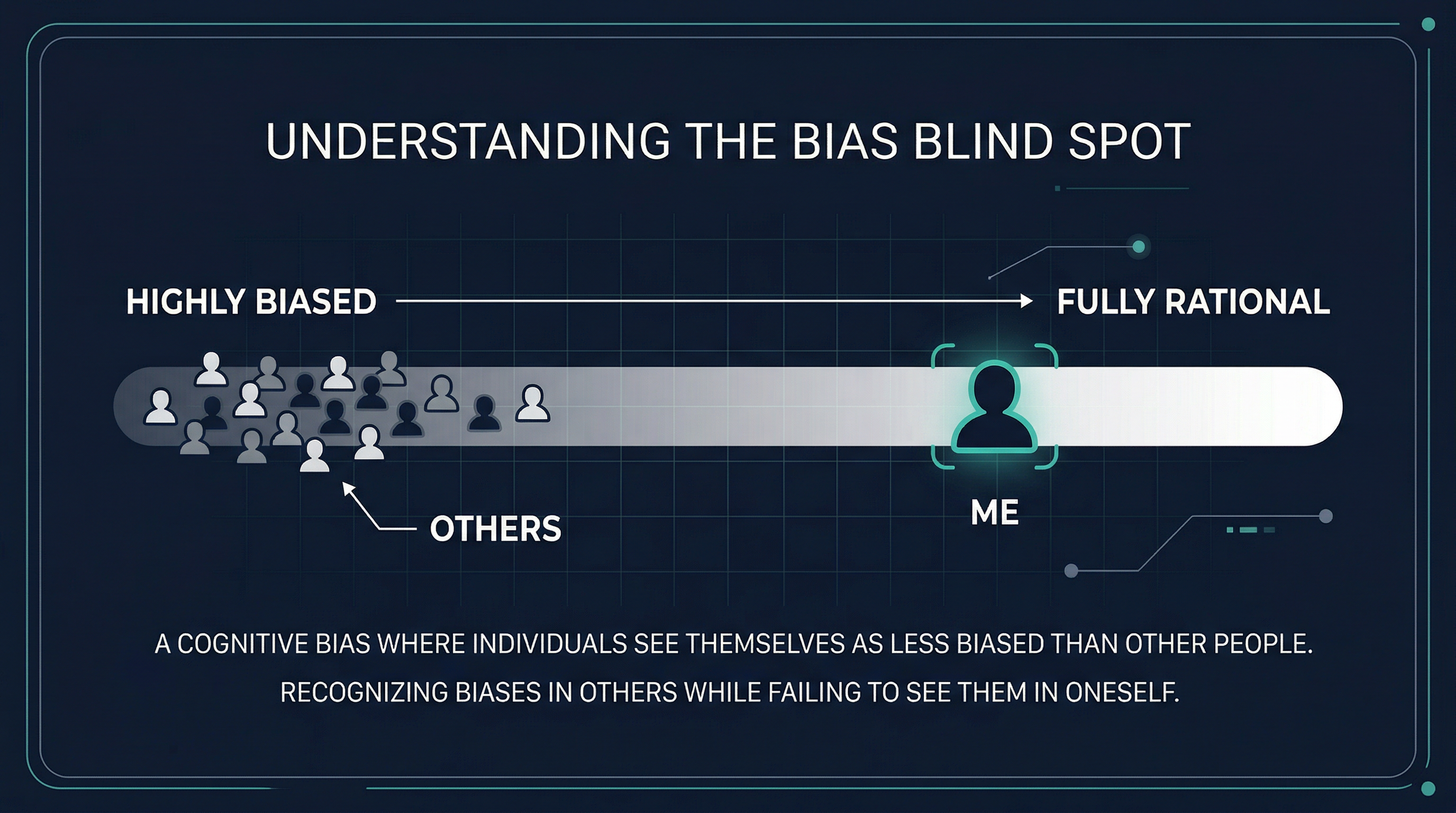
Ask any group of people: are you more or less biased than the average person? Almost everyone says less. Significantly less.
The problem? We can't all be right. This pattern has a name — the bias blind spot — and it's one of the most important things to understand if you want to think well.
Confirmation bias is our tendency to look for information that supports what we already believe, and to ignore what challenges it. It is one of the most well-studied patterns in human thinking. A 2024 study of 1,479 people found that simply learning about confirmation bias made people noticeably better at spotting false information. But there was a catch: the people who resisted the lesson most were those who already believed they were objective.
The first bias, in other words, is thinking you don't have one.
What a narrow information diet actually costs you
When we only see information that agrees with us, our thinking doesn't just become more confident — it becomes more fragile. We lose the ability to understand the other side, to spot weak points in our own reasoning, or to change our mind when new evidence appears.
Political division is the most visible sign of this. But the same pattern affects how we think about science, health, money, and relationships. A 2025 study found that AI tools can make this worse: when you interact with a chatbot in ways shaped by your existing beliefs, it tends to adjust to you — reinforcing what you already think rather than offering a different perspective.
If we want AI to make us smarter, we need to actively push back against this.
Three things you can do about it
1. Seek out the strongest version of the opposing view. Not to agree with it — but to understand it well enough that you could argue it yourself. If you can't, you probably don't understand the issue as well as you think.
2. Use tools designed to show your blind spots. Ground News is a good example: it shows you how news outlets with different political views cover the same story, and highlights stories that are reported almost entirely by one side. It's a useful way to notice what you're not seeing.
3. Notice when you dismiss something instantly. When an idea makes you roll your eyes right away, that's worth pausing on. It might just be a bad idea — or it might be your confirmation bias at work.
Being smart isn't just about knowing more. It's about understanding how you know what you know — and staying genuinely curious about where your blind spots might be.
Want to think out loud about this? We'd love to hear from you.